
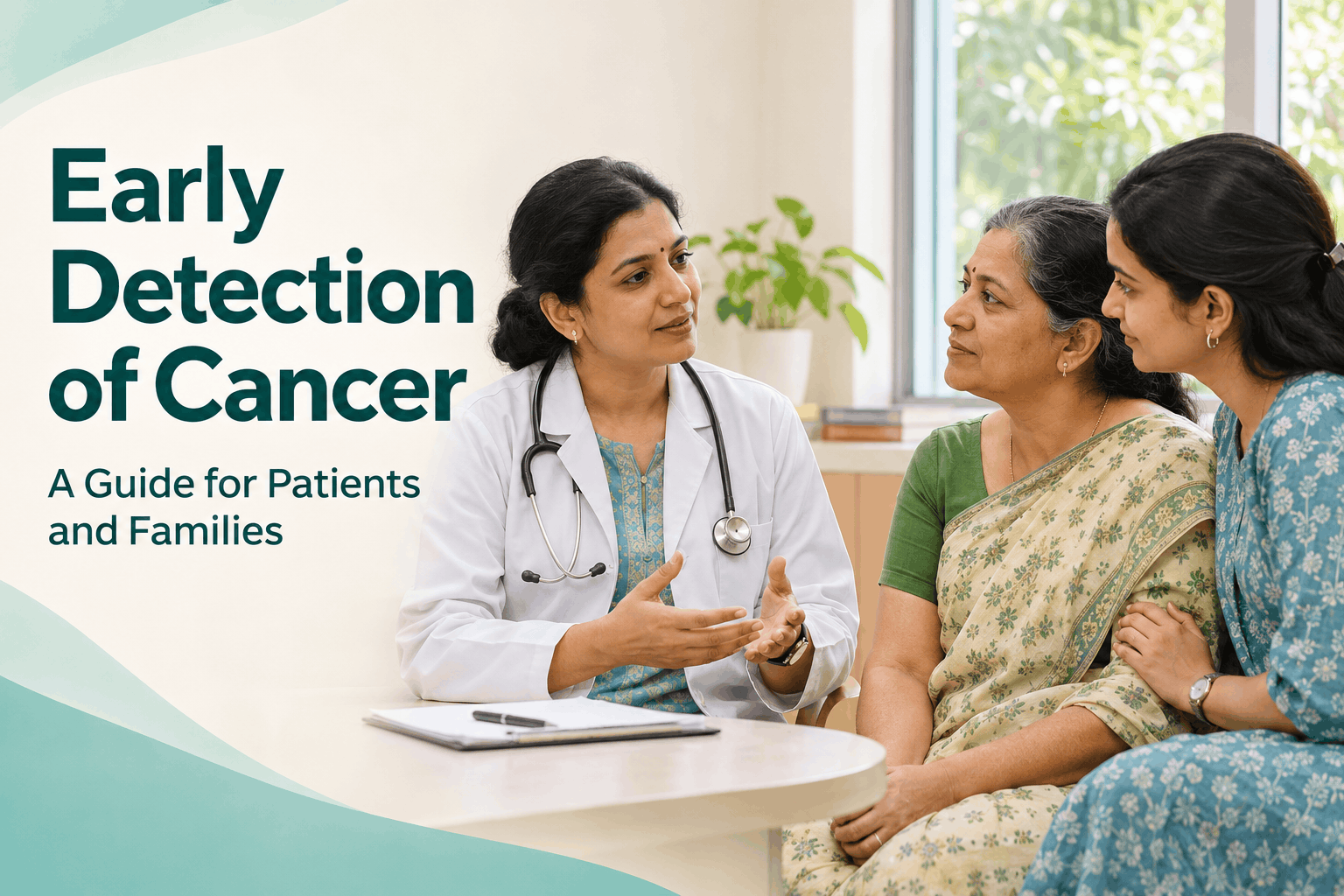
Waiting for a health concern to become painful can mean waiting too long. Some cancers cause little discomfort at first, while others have signs that are easy to mistake for everyday problems. Understanding early detection of cancer helps families recognise why a small, unexplained change deserves attention.
At Mickey Amogh Foundation, we encourage people to seek medical guidance with clear information and support. Knowing what needs checking, and what happens afterwards, can make that first step feel less difficult.
When certain cancers are found before they spread, treatment may be more effective. Some patients may have more treatment options or need less extensive care than they would at a later stage.
The benefit is not the same for every person or every cancer. The type of disease, its behaviour and the person’s health all affect treatment results. Earlier diagnosis improves the outlook for many cancers, but it cannot guarantee recovery.
It also needs to be followed by suitable care. A test result alone does not improve health unless the next medical steps happen when needed.
There is no need to assume that every ache or cough means cancer. Many cancer symptoms also occur with other illnesses. What matters is getting an unexplained change assessed instead of deciding its cause at home.
Examples include:
A new lump or unexplained bleeding needs prompt medical advice. Other changes that persist, worsen or keep returning also deserve attention. Pain is not a reliable measure of how serious a condition may be.
Screening is intended for people without symptoms and can help find certain cancers or changes that may develop into cancer. For example, mammograms are used for breast screening, while HPV testing helps assess cervical cancer risk.
Suitable screening tests depend on age, medical history, personal risk and the guidance followed locally. A family history may affect recommendations, but people without one may also benefit.
Screening has limits. A result can miss a problem or suggest one when no cancer is present. It can also detect a cancer that would never have caused harm. Discussing the benefits and risks with a doctor helps people decide what is appropriate.
A medical consultation is easier to follow when useful information is ready. With the person’s agreement, a family member can help prepare:
Practical help with transport or childcare can also make attendance easier. Give the person room to explain their concerns in their own words. Support should respect their privacy and decisions.
Through our educational sessions, community programmes and digital content, we explain health concerns in everyday language. We help people connect with suitable specialists and screening services, and offer emotional support to patients and caregivers.
Our role in encouraging early detection of cancer includes helping families understand where to begin. We address fear and confusion while leaving diagnosis and treatment decisions to medical professionals. Seeking an assessment should feel like a sensible step towards understanding a concern.
An unusual test result is a reason for further assessment, not a confirmed diagnosis. Depending on the finding, a doctor may recommend another examination, imaging or a small tissue sample. Understanding the purpose of the next test can help families manage uncertainty while they wait.
Before leaving an appointment, clarify when results are expected and who will explain them. If they do not arrive, contact the team that arranged the test. Silence should not be taken as reassurance. A recent normal screening result also does not rule out the need to assess a new or lasting symptom. Following through helps turn an initial check into a clear next step.